The First Academic Symposium on Frontier Paradigms of Literary and Artistic Research from an Interdisciplinary Perspective Held
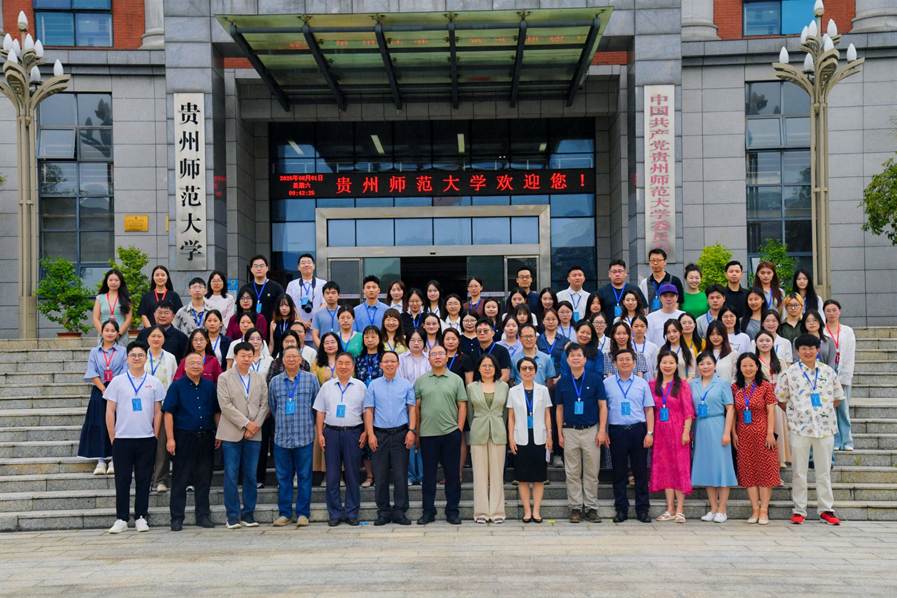
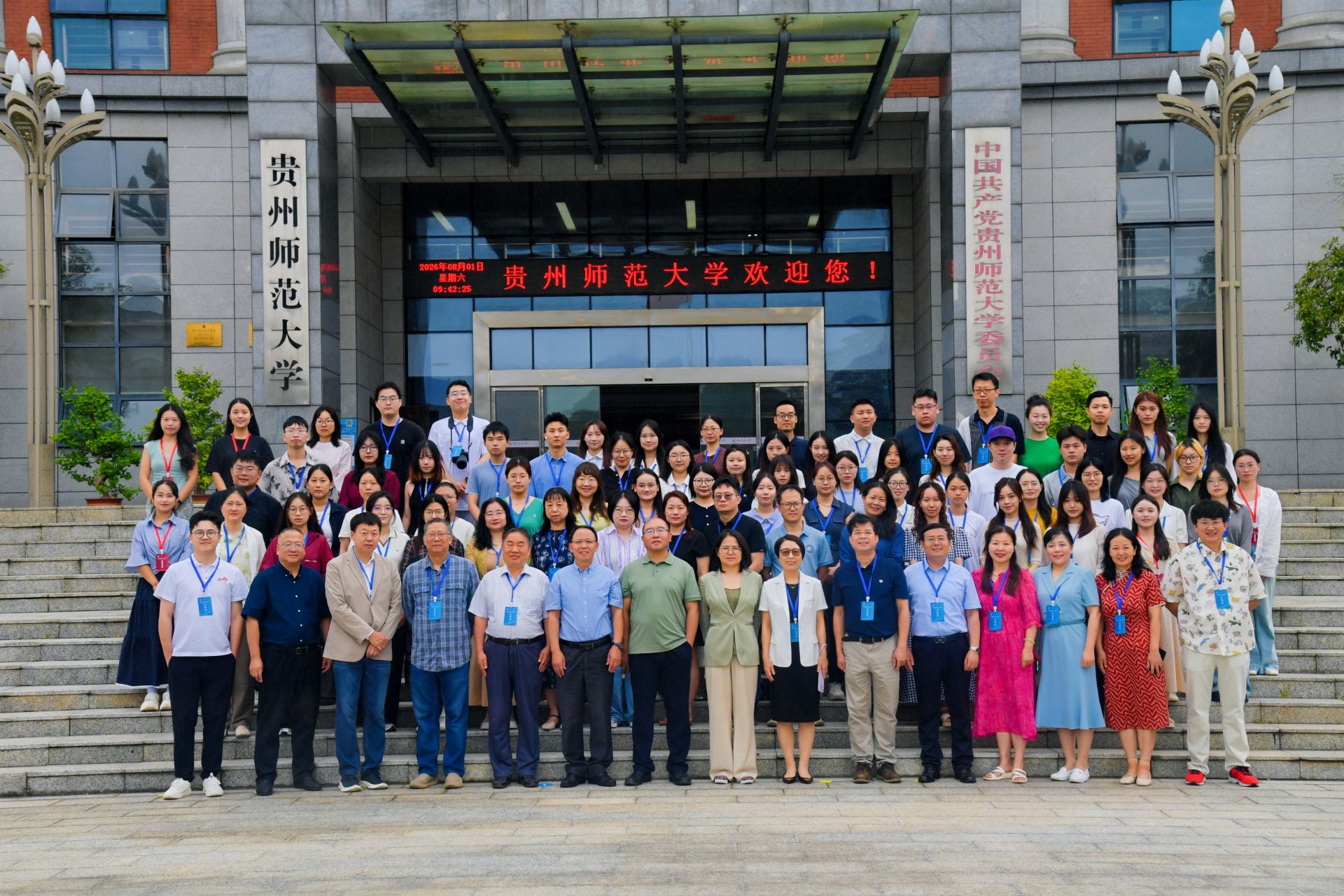
Hosted by the School of Liberal Arts, Guizhou Normal University, The First Academic Symposium on Frontier Paradigms of Literary and Artistic Research from an Interdisciplinary Perspective convened at the East Campus of Guizhou Normal University. A host of scholars and academic journal editors‑in‑chief engaged in literary‑art studies at home and abroad gathered to exchange views on themes including narrative and media, literary geography, ecocriticism, digital humanities, and the ontology of dramatic art.
At the opening ceremony, Professor Leng Jiangshan, Dean of the School of Liberal Arts, Guizhou Normal University, presided over the session. Professor Guan Xinfu, Vice‑President of Guizhou Normal University, delivered a welcome address, extending warm greetings to participating experts and outlining the university’s academic traditions and innovative explorations in humanities and social sciences. Afterwards, Professor Liu Maosheng from Guangdong University of Foreign Studies, President of Drama/Theatre Division, Chinese Association for Comparative Studies of Languages and Cultures, gave an opening speech. He argued that contemporary literary‑art studies ought to break down disciplinary barriers and seek new growth points through dialogue among diverse methodologies. Another highlight of the opening ceremony was the reading of the Guiyang Consensus: Openness, Innovation and Empowering Scientific Research by Professor Zhang Lianqiao from the School of Humanities, Guangzhou University, Editor‑in‑Chief of Journal of Literary Writing and Evaluation. The release of the Consensus marks the most emblematic conceptual outcome of this conference and constitutes a collective response by participants to the current ecosystem of literary‑art scholarship. Amid the impacts of digitalization and interdisciplinary trends, the Consensus identifies priorities such as open‑access for OA journals, co‑construction and sharing of academic resources, and the international dissemination of Chinese scholarly discourses, furnishing a referential framework for future research collaboration and academic community building. Synthesizing the shared aspirations of academia, journal editorial circles and higher‑education institutions, the Consensus elevates the symposium beyond mere idea‑sharing into an action‑oriented academic commitment.
In the first keynote session, Professor Tian Junwu (Beihang University), Editor‑in‑Chief of Journal of Travel Literature Studies, presented the paper On Narrative and Media in Travel Literature. He traced how media technologies including letter‑writing, print media, photography and digital imagery have shaped narrative modes within travel literature. Professor Sun Yi from Guangdong University of Foreign Studies, Editor‑in‑Chief of Journal of Guangdong University of Foreign Studies, drew on Bourdieu’s field theory to analyse QiaoPi, the silver‑and‑letter correspondence sent home by overseas Chinese diasporas. He illustrated how these cultural texts carry emotional memories and identity construction through conversions of economic, social and cultural capital. Professor Fang Ying from Zhejiang University of Technology, Editor‑in‑Chief of International Journal of Geography and Spatial Studies, put forward the conception of comparative literary geography, advocating identification of laws governing geographical narratives via cross‑cultural and cross‑regional comparisons of literary spaces. Professor Wang Zhongqiang from Southern Medical University, Editor‑in‑Chief of International Journal of Medical Humanities Studies, adopted a medical‑humanities lens to discuss the practical therapeutic functions of literary reading and creation in psychological healing.
During the afternoon sessions, Professor Wang Songlin from Ningbo University, Editor‑in‑Chief of Journal of Maritime Literature and Culture, deliberated on blue humanities and blue poetics, unpacking the aesthetic and ethical values of ocean‑themed imageries and marine civilizations in literature. Professor Jiang Lifu from Nanjing University of Aeronautics and Astronautics, Editor‑in‑Chief of International Journal of Ecology and Culture, introduced core tenets of traditional Chinese medicine philosophy such as yin‑yang balance and the unity of human and nature into ecocriticism, constructing the locally rooted theoretical framework of TCM‑Ecocriticism. Professor Du Lili from Lanzhou University analysed Fingersmith by British author Sarah Waters, examining how sensory depictions and material details facilitate historical reconstruction and ethical articulation. Professor Li Yun from South China Normal University, Editor‑in‑Chief of Frontiers in Discourse Studies, delivered the address Towards an Independently‑Constructed Chinese Critical System for Global‑South Literary Studies. He advocated transcending Western‑centered paradigms and building subject‑oriented literary critical theories grounded in Chinese experience and Third‑World cultural standpoints. Associate Professor Wang Xichong from Hubei University, Editor‑in‑Chief of Journal of Literature and Music Studies, investigated the digital transformation of musical writing and the impacts of AI‑aided musical composition on cross‑art research bridging literature and music. Professor Kong Jing from Shanxi Normal University explored narrative features of AI‑generated characters in twenty‑first‑century American theatre, investigating how playwrights employ stage performance to reflect on humanity, consciousness and post‑human conditions.
On the following day, Professor Liu Maosheng from Guangdong University of Foreign Studies, Deputy Editor‑in‑Chief of Interdisciplinary Literary Studies and Editor‑in‑Chief of Frontiers in Theatre Studies, drew upon contemporary theatre practices to analyse the media attributes and aesthetic transformations of dramatic art shaped by digital media and interdisciplinary arts. He called for timely renewal of critical discourses. Professor Tan Huijuan, Hanzhou Electronic Science and Technology University, Editor‑in‑Chief of Frontiers in African Diaspora Studies, and Associate Professor Li Beilei, Zhejiang Normal University,its editorial staff, gave a joint presentation. They interrogated the dialectical interplay between “indigenous Africa” and “African diaspora”, discussing separation and mutual construction between diasporic communities and the African continent in terms of cultural identity and historical memory. Professor He Lin, Vice‑Dean of the School of Liberal Arts at Guizhou Normal University, drew on local multi‑ethnic cultural resources. He analysed contemporary transformations of ethnic‑minority literature in narrative themes, perspectives and language, alongside its significance for consolidating the sense of community for the Chinese nation.
The symposium closed on the morning of August 2. The list of selected outstanding conference papers for peer review was announced, followed by presentations from representatives of young faculty, doctoral students and master’s students. Associate Professor Huo Shengya from Central University of Finance and Economics shared reflections on academic research as the young‑faculty representative. Chen Yingyi from Guangdong University of Foreign Studies and Yuan Ruobing from Zhejiang University of Technology, doctoral and master’s student representatives respectively, reported their takeaways from the conference, demonstrating the intellectual vitality of younger‑generation literary‑art researchers. In his closing summary, Professor Zhang Lianqiao recapitulated the symposium’s achievements in interdisciplinary theoretical construction and exploration of indigenous critical discourses. He proposed that researchers should root scholarship in fine traditional Chinese cultural resources, respond to cutting‑edge humanities and social‑science propositions, and persist in constructing China’s independent literary‑art critical discourse system.
Overall, this symposium took interdisciplinary integration as its point of departure. It values the accumulated heritage of conventional literary research while remaining open to emerging issues such as artificial‑intelligence‑infused humanities studies, building an interactive platform for journal editorial teams and university‑based researchers. The release of the Guiyang Consensus translates conceptual advocacy into institutional exploration. Initiatives covering OA journal development, industry‑university‑research collaboration and the international communication of Chinese scholarship will be progressively implemented in subsequent academic practice. The Consensus envisions an open, inclusive, collaborative and innovative academic community, furnishing referential directions for the long‑term advancement of literary‑art research.
Appendix: Cooperating Journals of the Conference
International Journal of Lu Xun Studies Editorial Office
Journal of Chinese Education and Evaluation Editorial Office
Journal of Literary Writing and Evaluation Editorial Office
Journal of Teaching Innovation and Evaluation Editorial Office
International Journal of Geography and Spatial Studies Editorial Office
Journal of Maritime Literature and Culture Editorial Office
Frontiers in African Diaspora Studies Editorial Office
Frontiers in Theatre Studies Editorial Office
Journal of Social‑Science Innovation Editorial Office
Journal of Publishing and Criticism Editorial Office
International Communication Studies of Literature and Art Editorial Office
Modern Media Studies Editorial Office
Journal of Measurement and Evaluation Editorial Office
Journal of Educational Economics and Technology Editorial Office
Modern Information Resource Management Editorial Office
Journal of Integrated Cultural Studies Editorial Office
Journal of Travel Literature Studies Editorial Office
Digital Humanities and Science‑Fiction Studies Editorial Office
Frontiers in Discourse Studies Editorial Office
Global Civilization Studies Editorial Office
Journal of Economic Studies in Literature Editorial Office
Journal of Literature and Music Studies Editorial Office
Frontiers in Global Sinology Editorial Office
Journal of Ethnic Literature and Culture Editorial Office
International Journal of Ecology and Culture Editorial Office https://mp.weixin.qq.com/s/fTjHIuDkvBdL5jH_sF4RkQ
The full conference handbook is available for download by clicking here:
https://mp.weixin.qq.com/s/fTjHIuDkvBdL5jH_sF4RkQ